



A New Chapter in Precision
- New line of engineered solutions
- Configured for evolving
customer applications - Reflects our commitment to
continuous improvement - Supports performance







A New Chapter in Precision
The global textile industry produces an estimated 92 million tons of waste each year, which accounts for nearly 7% of the world’s total waste. At the same time, it consumes over 93 billion cubic metres of water annually, adding immense pressure on natural resources. These staggering figures highlight the urgency of adopting more sustainable practices, especially in textile waste management.
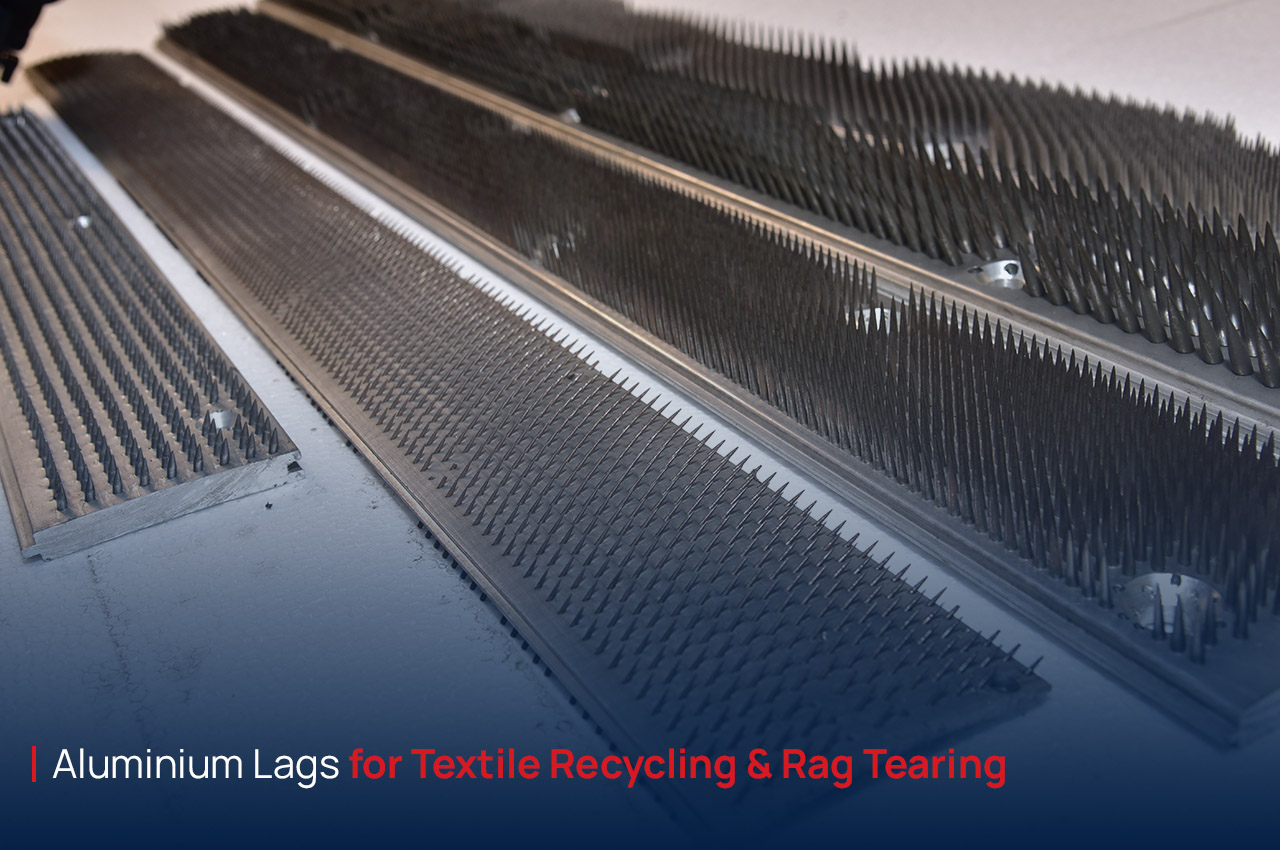
One of the most effective approaches to reducing textile waste is recycling and rag tearing, where discarded fabrics are processed and broken down into fibres that can be reused for new applications. A critical component in this process is the use of aluminium lags, which play a significant role in improving efficiency, reducing downtime, and ensuring consistent fibre quality.
Aluminium lags are specialised components installed on rollers and feeding systems within textile tearing and recycling machines. Their primary function is to grip and feed textile material smoothly into the machine for further processing. Unlike traditional steel or rubber options, aluminium lags offer several advantages that make them highly suitable for recycling operations:
By enabling smoother feeding and handling, aluminium lags directly contribute to better fibre recovery, reduced waste, and improved productivity in recycling plants.
To understand why aluminium lags matter, it helps to look at how fibre recycling and rag tearing processes function. Efficient recycling depends not only on the strength of the machinery but also on how well fibres are handled during processing.
Opening Quality (% of Opened Fibre):
The degree of fibre opening affects recyclability and product quality. Higher opening quality means fibres can be more effectively reused. Aluminium lags help maintain steady feeding, increasing the percentage of fibres that open without damage.
Fibre Rupture:
Excessive rupture reduces fibre length and overall usability. A balance between opening and preserving fibre integrity is essential. Aluminium lags aid this balance by providing controlled feed pressure.
Pin Life Span:
In tearing machines, high-quality pins can process over 12,000 tons of fibre on a 1.5-metre machine before replacement is needed. Consistent feeding from aluminium lags reduces unnecessary stress on pins, indirectly prolonging their lifespan.
Passage Requirements:
Opened fibres require narrower passages for smooth movement. Aluminium lags ensure a steady feed, helping fibres flow without clogging or rupture.
De-dusting Action:
Early in the recycling process, pins and rollers also help remove dust. With stable feeding, aluminium lags contribute to more effective de-dusting, improving downstream fibre quality.
Alongside fibre properties, machine conditions also determine the quality and efficiency of recycling and rag tearing. Aluminium lags contribute positively in several of these areas:
Machine Speed:
Operating at excessively high speeds can damage fibres. Aluminium lags help stabilise feeding at optimal speeds, reducing rupture risk.
Feed Roll Gauge:
Proper calibration ensures fibres are fed consistently. Aluminium lags maintain even pressure across rollers, avoiding irregular stress on fibres.
Condition of Feed Rollers:
Worn-out rollers can cause uneven feeding. Aluminium lags, known for their durability, maintain consistent performance over long periods.
Suction Capacity:
Adequate suction is essential to remove dust and maintain fibre flow. Smooth feeding with aluminium lags allows suction systems to perform more effectively.
Pin Design & Surface:
Fibre-friendly pin surfaces prevent damage. Aluminium lags work well with these designs, keeping feeding stable while minimising rust and contamination risks.
When integrated into textile recycling machinery, aluminium lags offer a series of benefits:
The growing textile waste challenge requires both innovation and practical solutions. Recycling and rag tearing play a vital role in reducing the environmental burden of discarded textiles, but the success of these processes depends heavily on the efficiency of machinery and its components.
By adopting advanced parts such as aluminium lags, recycling plants can achieve a balance between productivity and sustainability. These components not only improve the efficiency of fibre recovery but also contribute to longer machine life and reduced operational costs.
Ultimately, small improvements in machinery design and component choice, such as the use of aluminium lags, can have a large impact on the industry’s ability to manage textile waste responsibly.
Textile recycling and rag tearing are essential to addressing the global textile waste crisis. While the processes may seem straightforward, their efficiency relies on numerous technical details, from fibre opening to machine speed. Among these, aluminium lags play a vital role in ensuring smooth feeding, reducing rupture, and improving overall recycling outcomes.
As the industry continues to search for sustainable solutions, the integration of efficient machine components like aluminium lags represents a crucial step forward, helping turn today’s waste into tomorrow’s resources.


